A ceramic studio in Álafoss.
The work should feel ancient, but not old-fashioned. Quiet, precise, and made from rough material — clay, fire, hand, and repetition.
Studio Esja is a ceramic studio in Álafoss, in Mosfellsbær, Iceland. We are potters: everything here is thrown on the wheel, glazed and fired in the studio, and finished one piece at a time. The studio has been working under this name since 2025. This page is the record of where the work is made, how it is made, and the standard it is held to.
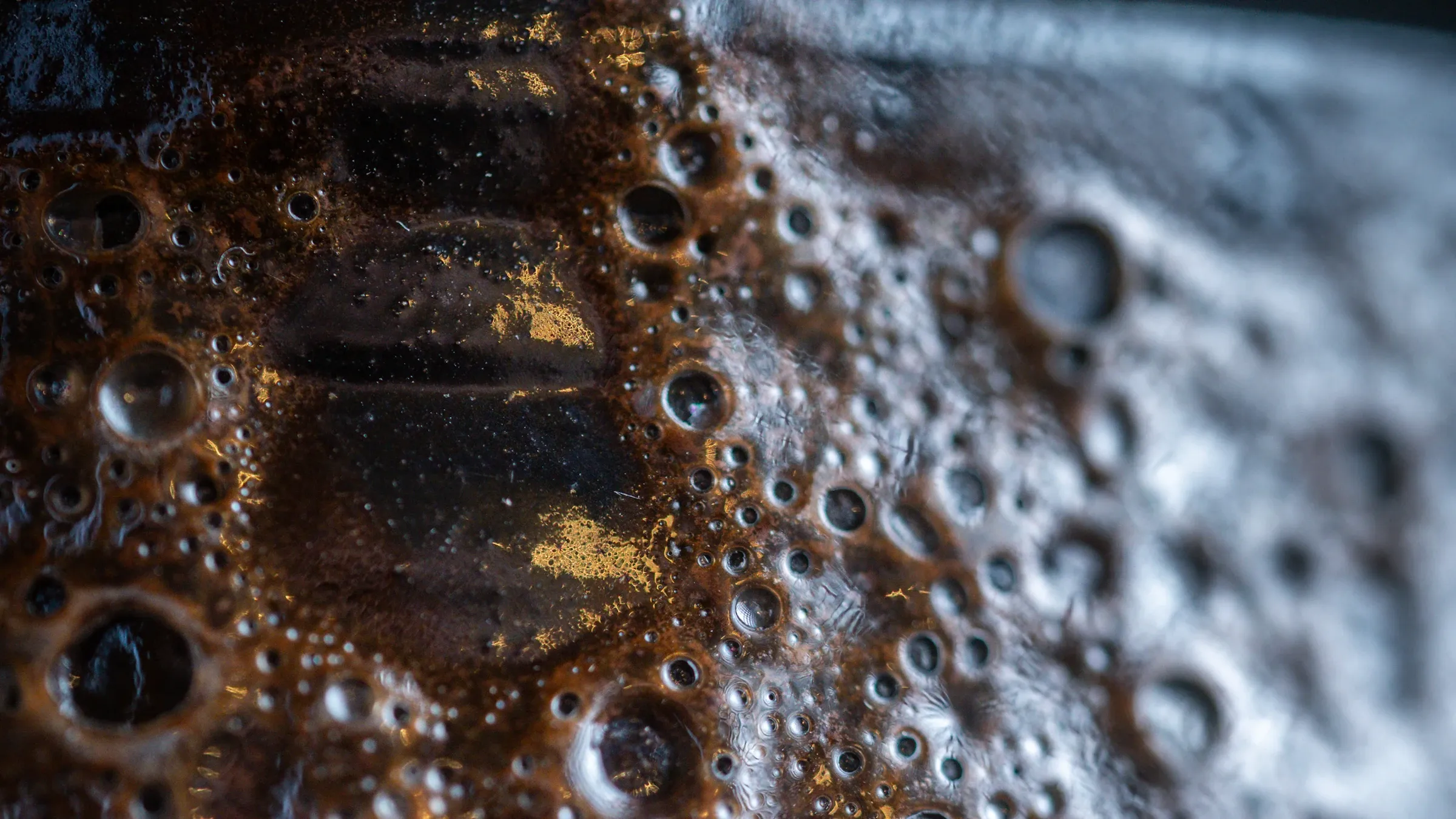
Where the work is made.
Álafoss is an old mill hamlet in Mosfellsbær, about twenty minutes north of Reykjavík, gathered around the river and the falls the place is named for. It has been a working village for a long time — wool before clay — and it keeps the particular quiet of a place built for making things rather than for looking at.
The studio sits in that quiet, under the mountain the studio is named for. Esja changes colour through the day and disappears entirely in weather; it is the first thing you see on a clear morning and the reason the light here is never the same twice. That light is what the pieces are photographed in, and, more usefully, what they are judged in.
Visits are by arrangement only. The public address is Álafoss, Mosfellsbær; the exact studio address is shared when a visit or a collection is agreed.

.jpeg)
.jpeg)
Thrown, not assembled.
Every piece begins as a ball of clay on a moving wheel. The form is raised in one continuous pull, trimmed when it has firmed to the hardness of a cold apple, and then left alone. Nothing here is slip-cast, pressed out of a mould, or bought in and decorated.
A handle cannot be decorated into existence. It has to be pulled from the same clay, belong to the form, and then disappear into use — a cup that is a pleasure to look at and a nuisance to hold has failed at the only test that matters. That is the standard the studio works to, and it is unforgiving: a maker's whole training shows up in a handle.
“A cup can look simple, but the handle reveals everything.”
It has to belong to the form, and disappear into use.

.jpeg)
.jpeg)
.jpeg)
Rough material, exact heat.
The body is stoneware — fired high, dense enough to hold heat and to be used every day rather than kept behind glass. The glazes are mixed in the studio from raw minerals and tested in small batches before any of them go near a finished piece.
Firing is where the studio's control ends. The kiln is loaded and the schedule is set by hand, and after that the work belongs to heat and time. Some pieces come out better than they were designed to be. Others are broken and put back into the clay.
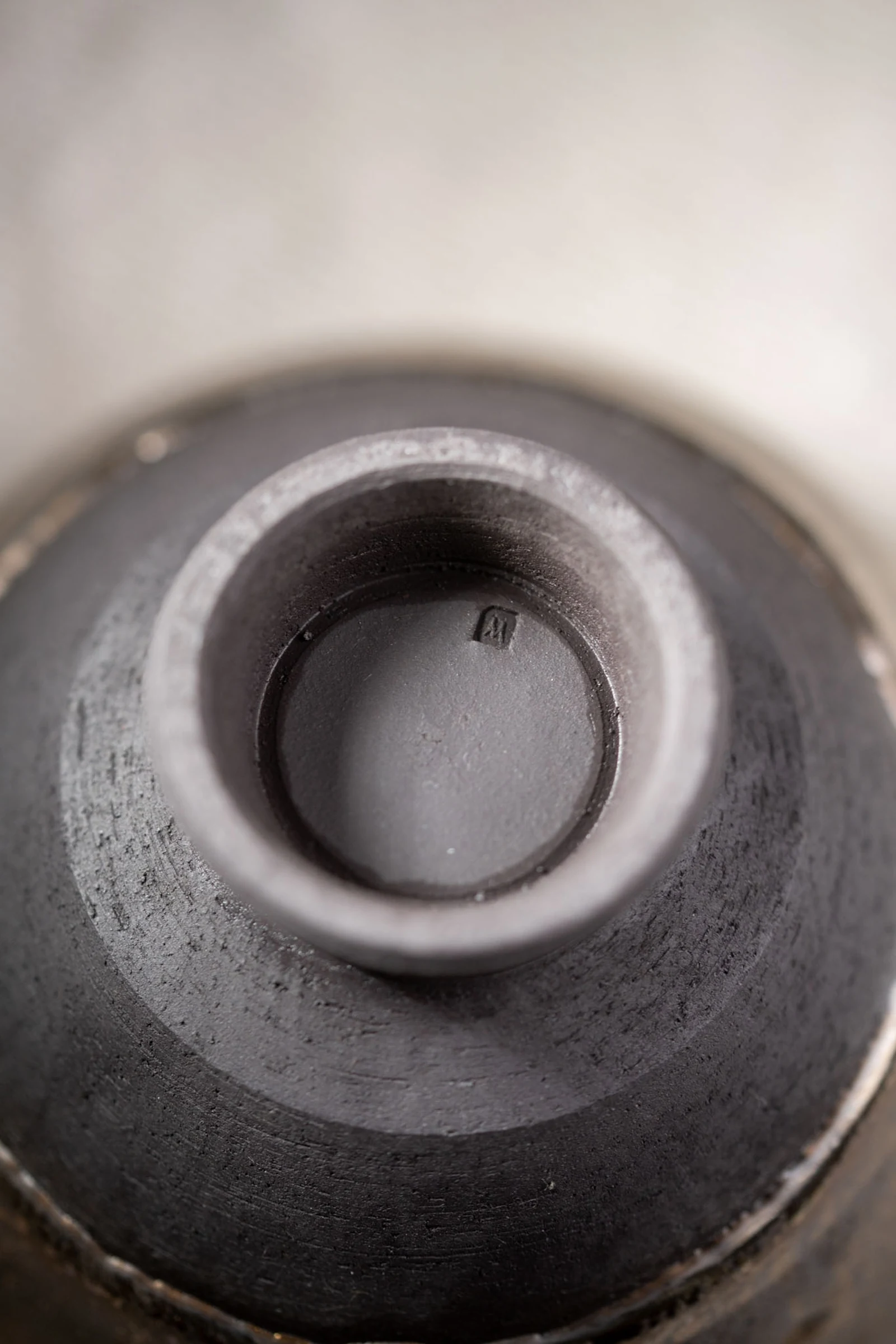
What the studio makes.
Cups, yunomi, bowls and tea bowls: the small daily forms, made properly. The affinity is for Japanese proportion — the unforced line, the foot that is part of the form rather than an afterthought — set against Icelandic light and Icelandic weather, which are less forgiving of decoration than most places.
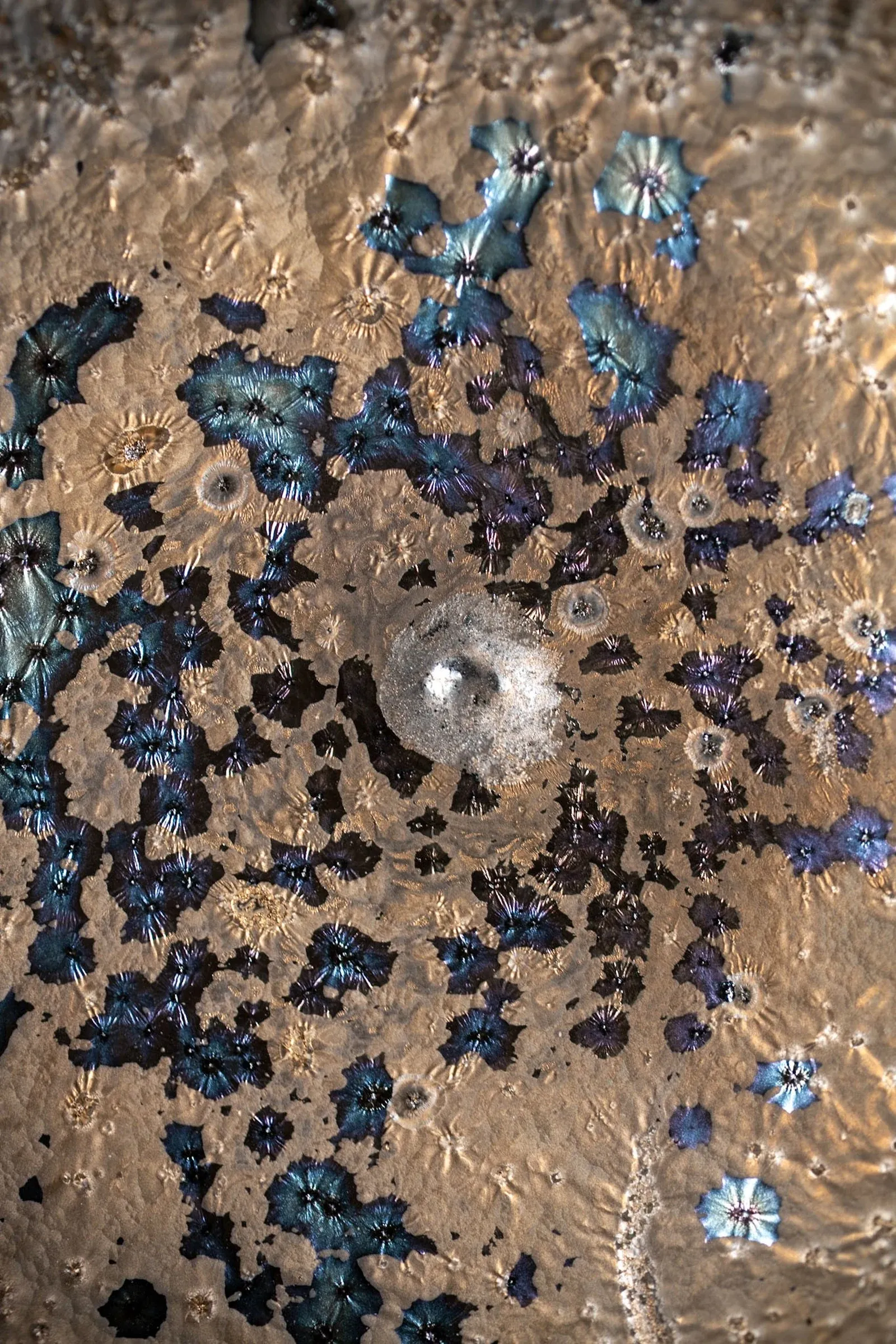
The work is wheel-thrown stoneware in crystalline and crackle glazes, made in short series and finished one piece at a time. Every finished piece is an edition of one: signed on the foot, numbered, and entered into the studio registry — a permanent record of provenance that stays with the work.
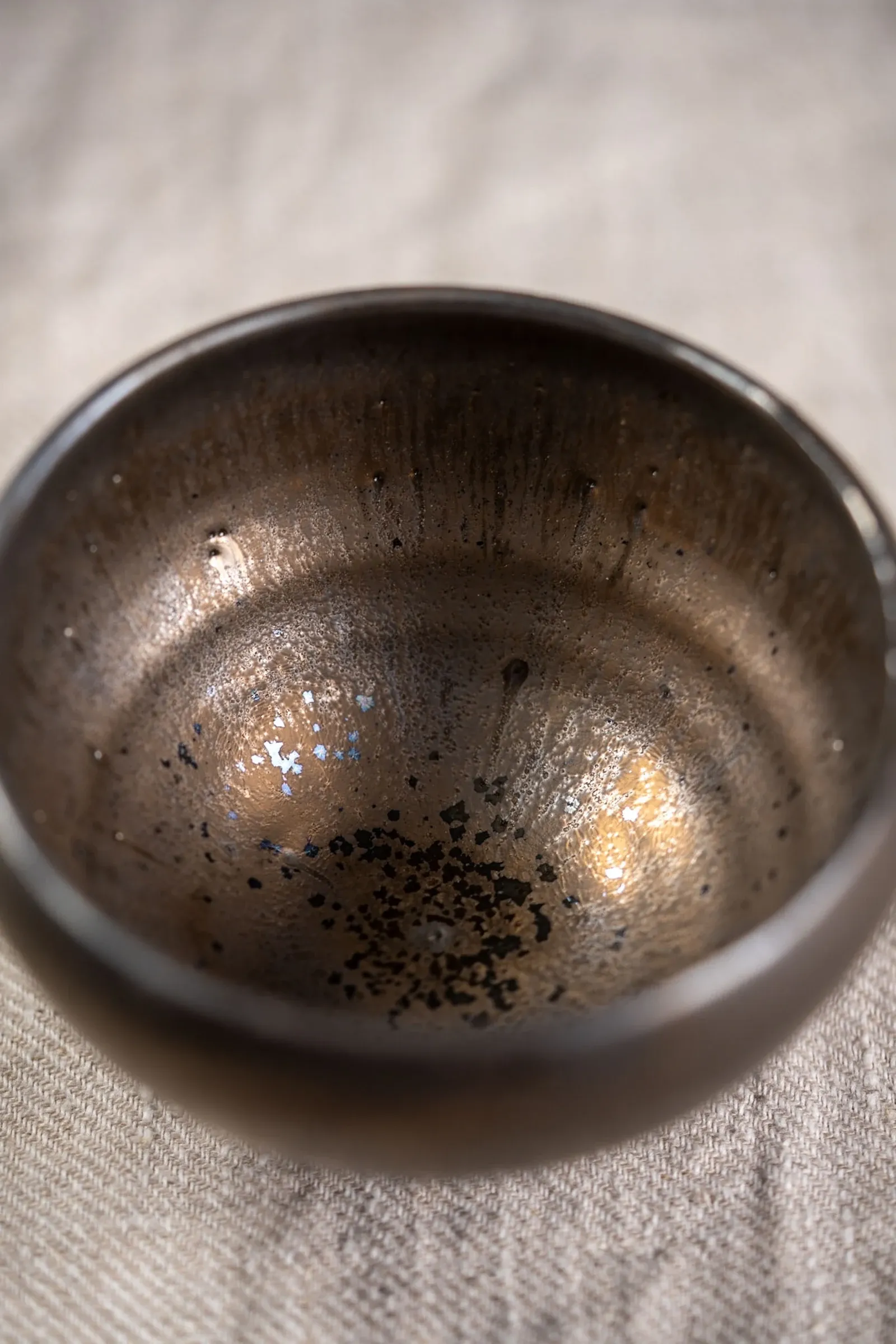
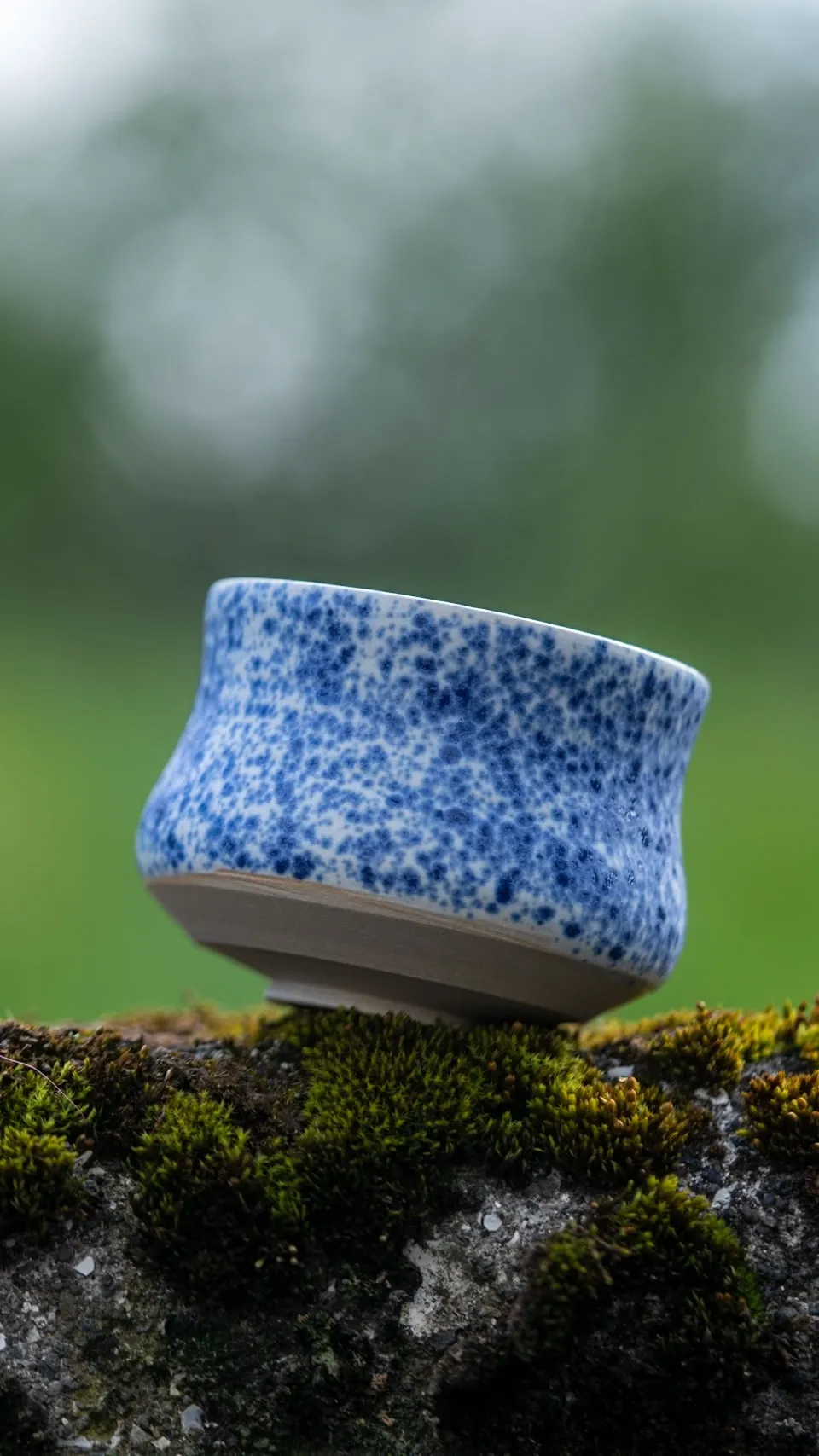
Why every piece is one of one.
A crystalline glaze is not a decoration; it is an event. The glaze is loaded with zinc and silica, taken to the edge of melting, then held — sometimes for hours — at the narrow temperatures where crystals will seed and grow across the surface. The crystals grow where they grow. They cannot be placed, drawn, or asked to repeat.
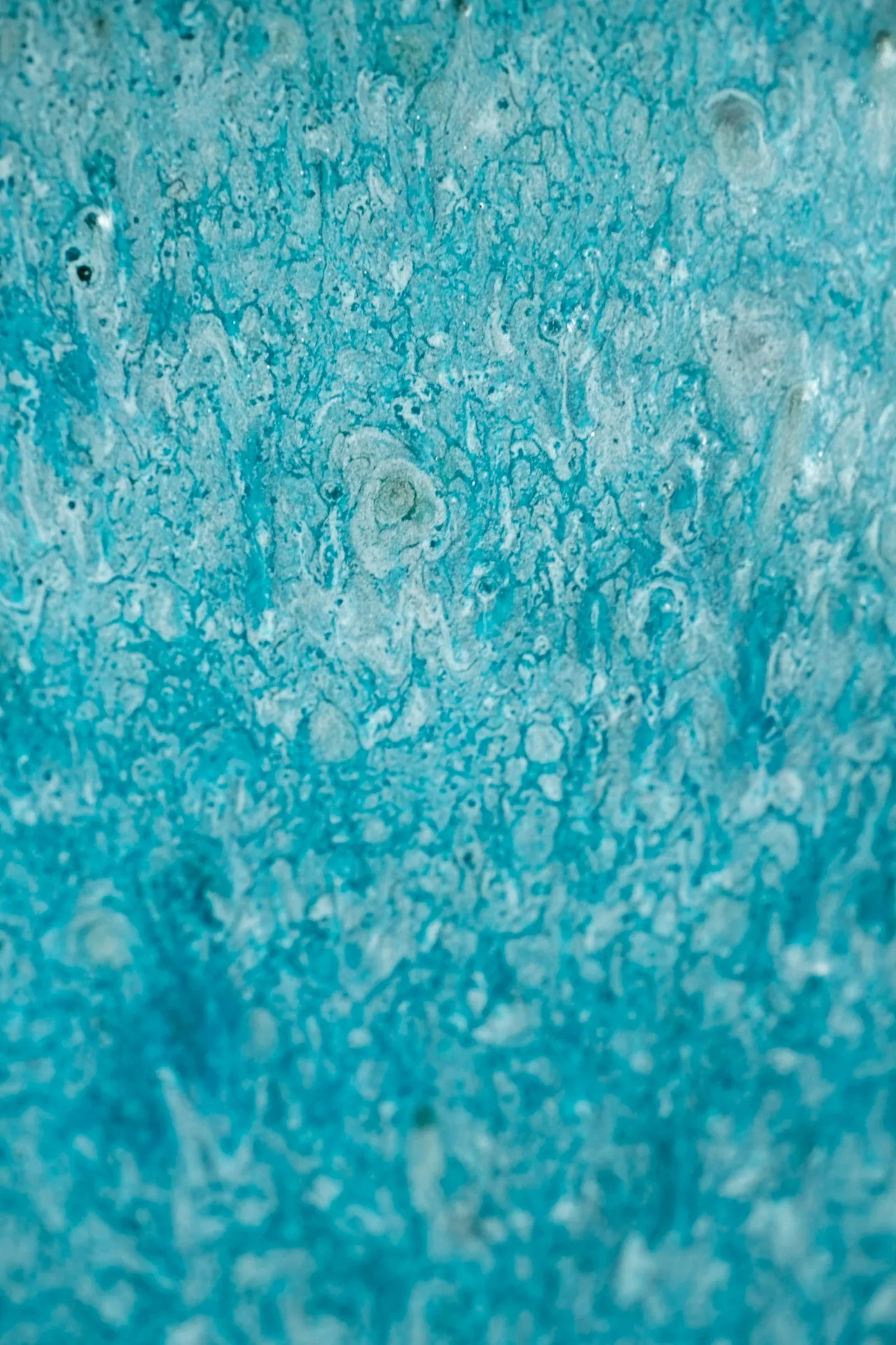
A crackle glaze works the opposite border of the same physics. Glaze and clay are chosen to shrink at slightly different rates, so that as the piece cools, the surface breaks into a fine net of lines — a map of that one cooling, on that one day, in that one kiln.
This is what “edition of one” means here. It is not a marketing sentence; it is a physical fact of the process. The studio can control the clay, the form, the glaze and the schedule, and then it hands the piece to the fire — which is exactly why two pieces made the same morning, from the same batch, in the same load, come out as two different objects.
The pieces that meet that standard go to the current collection; the ones that sell are kept visible in the archive. How a piece is made, start to finish, is written plainly in the journal.
A studio is not a brand; it is a standard and a place. To own one of these pieces is to hold one morning's work in Álafoss — recorded in the registry, signed on the foot, and made exactly once.
— Studio Esja, Álafoss